Most homes in Wheat Ridge went up in the fifties and sixties, and the electrical services in Littleton network that serves them knows exactly what that means: fuse boxes that were never replaced, two-prong outlets throughout, and panels that trip the moment a second appliance starts. Professional electrical panel upgrade work addresses the root of that problem rather than the symptom.
When a breaker will not reset or an outlet runs warm to the touch, Wheat Ridge homeowners call a local electrician because these houses need someone who already knows what is inside the walls.
Knowing Wheat Ridge Homes Changes How the Work Gets Done
A local electrician working in Wheat Ridge has seen the same fuse boxes, the same knob-and-tube remnants, and the same undersized panels in house after house. That familiarity means fewer surprises once the panel cover comes off and the work begins.
These homes most often need panel replacements and grounding upgrades. Electricians serving Golden, CO electrical services nearby handle similar jobs, but the construction details in Wheat Ridge houses shape every step of the approach.
If an outlet feels warm or a breaker trips every week, getting it looked at now keeps a small problem from becoming a costly one.
Electrical Work Matched to How Wheat Ridge Homes Are Built
Wheat Ridge homes built in the fifties and sixties typically sit on full basements with the panel mounted on a basement wall. Running a new circuit means working through that basement, which is straightforward - but older framing and insulation added later can complicate the path.
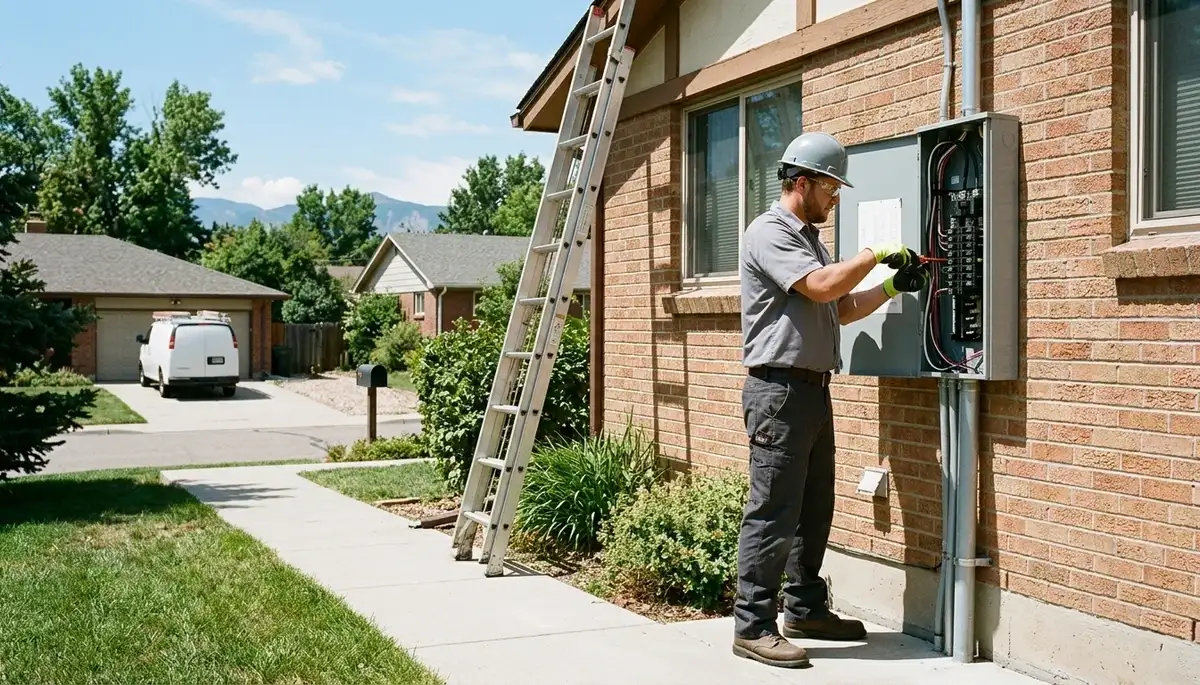
Brick bungalows and wood-frame ranch houses make up most of what is here. A brick exterior wall changes where conduit can run, and a finished basement ceiling means opening it to reach the wiring. Expert electrical wiring work accounts for those constraints before the job starts.
Four services that fit these homes well: quality home electrical inspections to find what older construction hides, specialist GFCI circuit installation near every sink and bath, reliable outlet repair for the two-prong and ungrounded outlets common in these houses, and professional smoke detector installation to bring aging homes up to current safety practice.
What Wheat Ridge Homes Were Built With Still Shapes What They Need
Most houses in Wheat Ridge went up in the fifties and sixties, a period when sixty-amp service and fuse boxes were standard. Builders installed two-prong ungrounded outlets, minimal circuit counts, and wiring that was never intended to carry a refrigerator, a dishwasher, a clothes dryer, and a window air conditioner all at once. Three things follow from that: the panel is almost certainly undersized, the outlets in most rooms lack a ground, and any circuit added since then was likely tapped onto wiring that was already at its limit.
Fuses That Keep Blowing
When a fuse blows every time the kitchen runs two appliances, the fuse is doing its job - it is the panel behind it that cannot keep up. Sixty-amp fuse boxes were sized for households that ran far less than a modern kitchen draws on a quiet morning. Replacing fuses does not fix the capacity problem; it only delays it.
Local electricians replace fuse boxes with modern breaker panels sized for how the home is actually used. Homeowners in Arvada, CO with the same era of house have gone through the same upgrade, and the result is a panel with room to grow.
Outlets That Are Warm to the Touch
An outlet that feels warm when nothing heavy is plugged in points to a connection that is resisting current rather than carrying it cleanly. In homes from the late sixties and early seventies, aluminum branch wiring is often the cause - aluminum expands and contracts differently than the copper devices it connects to, and those connections loosen over time and generate heat.
Electricians address aluminum wiring by installing approved connectors at every device, or by replacing the affected runs entirely. Either way, the outlets stop running warm and the fire risk that comes with loose, overheating connections is removed.
Two-Prong Outlets Throughout the House
Two-prong outlets mean the circuit behind them has no ground path. Decades of use have not changed that; the wiring installed without a ground wire simply does not have one. Adapters do not add a ground - they only change the shape of the plug while leaving the circuit unprotected.
Adding grounded outlets means running a proper ground back to the panel or installing the outlets with test and reset buttons where a ground wire cannot be added. Both corrections bring the circuit up to what modern appliances and electronics require.
A Panel That Cannot Handle What Was Added
A car charger in the garage, a new air conditioning unit, or a hot tub on the back patio each draws more than the original service was sized to carry. On a hot afternoon when the air conditioning is running and the car charger is active, the panel reaches its limit and breakers trip. That is the service telling the homeowner it was never built for this load.
Adding capacity means replacing the panel with a larger one or adding a subpanel in the garage for the new loads. Once that work is done, the car charger, the air conditioning, and the kitchen all run without competing for what the original panel could not provide.
Basement Wiring Runs That Have Never Been Touched
In a Wheat Ridge home with a full basement, the original wiring runs are often still exposed along the joists - exactly as they were installed sixty years ago. Insulation added later, storage piled against the walls, and finished sections of the basement can make those runs difficult to reach and harder to inspect.
Experienced electricians work through the basement access points that exist rather than opening finished ceilings unnecessarily. Where a run must be replaced, they route new wiring through the path of least disruption, leaving the living space above undisturbed.
Arrange a no-pressure visit from a local electrician by calling (720) 999-9594. A walk-through of the panel and the main circuits is the fastest way to know what the house actually needs.
On Call Electrical brings straightforward work and results that hold to every Wheat Ridge home.

Electrical Services Available Across Wheat Ridge, CO
The work below covers what Wheat Ridge homeowners most often need. Find the item that matches what the house is telling you and reach out to get it handled.
Urgent Electrical Work for Wheat Ridge, CO Homes
- Electrical repair for a breaker that trips repeatedly or will not reset
- Outlet repair for receptacles that are warm, sparking, or dead
- Switch repair when a switch stops responding or buzzes when used
- Electrical panel work when the box runs hot or smells of burning
- Smoke detector installation when existing detectors are missing or past their service life
These are the calls that should not wait - a problem the homeowner notices today can become a hazard by the end of the week.
Capacity and Wiring Work for Wheat Ridge, CO Homes
- Electrical panel upgrade to replace a fuse box or an undersized breaker panel
- Electrical panel installation when the existing box has no room for additional circuits
- Electrical wiring replacement for aluminum branch wiring or original knob-and-tube runs
- Electrical service upgrade to bring sixty-amp or hundred-amp service up to what the home now carries
- New construction wiring for additions, finished basements, or garage conversions
Homes built in the fifties and sixties were wired for a load that bears little resemblance to what a household runs today - these upgrades close that gap.
Safety and Protection Work for Wheat Ridge, CO Homes
- GFCI circuit installation in kitchens, bathrooms, and any outlet near water
- GFC outlet installation to replace two-prong and ungrounded receptacles
- Home electrical inspections to find what older wiring and aging panels hide
- Whole home surge protection to keep appliances and electronics safe from voltage spikes
- Lightning surge protection for homes that rely on sensitive electronics and modern appliances
Older homes carry risks that are not always visible from the outside. A walk-through by a local electrician turns up the connections, outlets, and panels that need attention before they become emergencies. Getting ahead of those problems is the most cost-effective thing a Wheat Ridge homeowner can do for a house of this age.
Lighting, Outdoor, and Added-Load Work for Wheat Ridge, CO Homes
- Electric car charger installation for garages that were never wired for that load
- Landscape lighting installation for detached garages, sheds, and yard runs that have aged alongside the house
- Security light installation to put proper circuits behind exterior fixtures
- Recessed lighting installation in living rooms and kitchens where older fixtures no longer meet the homeowner's needs
- Generator installation for homes where a power interruption means losing heat, refrigeration, or medical equipment
These are the loads that Wheat Ridge homes were never sized for - adding them correctly means the panel, the wiring, and the new equipment all work together without pushing the system past what it can handle.