The homes in Conifer, CO were mostly built from the late 1960s through the 1980s, and the electrical repair services in Littleton network sends electricians who know exactly what that means: aluminum wiring at the connections, panels sized for a fraction of today's load, and outlets that were never grounded. Spotting a warm outlet or a breaker that trips when two things run at once is the homeowner's first sign something behind the wall needs attention. Reach a local electrician who knows these houses before a small problem grows.
Conifer homes carry wiring decisions made decades ago, and a local electrician reads those decisions faster than one who has never opened a panel from that era.
What Local Electricians Know About Conifer Homes
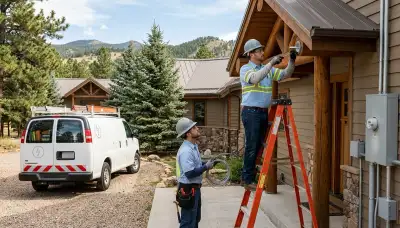
Most houses around here went up when aluminum branch wiring was common and panels topped out at 100 amps. A local electrician knows where the connections tend to loosen, where the grounding was skipped, and which circuits were added without the panel to back them up.
Two kinds of work come up repeatedly in Conifer homes: correcting heat at connections left by aluminum wiring and upgrading panels that were never sized for central air or a car charger. Homeowners in Evergreen, CO residential electricians territory see the same pattern in houses built the same way.
If an outlet feels warm or a breaker refuses to stay reset, get it looked at now rather than after it becomes a larger repair.
Electrical Work Matched to How Conifer Homes Are Built
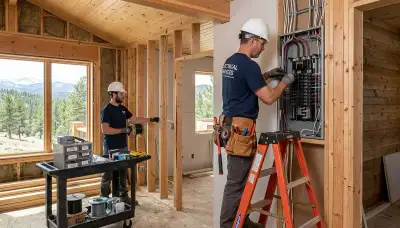
An off-the-shelf approach stalls fast in these houses. Panels sit in garages or utility closets with limited clearance, and running a new circuit often means working through finished walls rather than an open basement.
Detached homes here frequently have workshops or outbuildings on long outdoor runs that aged separately from the main house, each one presenting its own access problem. Homes with crawlspaces instead of full basements make pulling new wire a longer job than the circuit count alone would suggest. A professional electrical panel upgrade in a house like this takes more planning than it would in a newer build with open framing.
Local electricians handling work in Conifer, CO regularly cover expert GFCI circuit installation, quality generator installation, specialist outlet repair, and reliable electrical wiring work across these properties, each job shaped by what the house was built with and how the equipment reaches it.
When Conifer Homes Were Built Still Shapes What They Need
Most houses around Conifer went up from the mid 1960s through the early 1980s, a stretch when aluminum wiring was common in branch circuits, panels were sized at 100 amps or less, grounding was not yet required at every outlet, and circuit counts were drawn for a household running far fewer appliances than a home carries today. Three things follow from that: connections that loosen and heat up over time, outlets that have never had a ground wire behind them, and a panel that runs out of room the moment a modern load is added.
Outlets Warm to the Touch
An outlet that feels warm when nothing heavy is plugged in is a sign that an aluminum connection behind it has loosened. Aluminum expands and contracts with every load cycle, and a loose connection creates resistance, resistance creates heat, and heat left alone can char the box or reach the wall cavity.
Local electricians correct this by adding approved anti-oxidant compound and proper connectors at every aluminum termination, a repair that stops the heat cycle. Homeowners looking for the same work in Golden, CO electrical services find the same aluminum-era houses and the same fix.
Breakers That Trip on One Circuit
When the kitchen breaker trips the moment a toaster and a microwave run together, the circuit was drawn for a load that did not include both appliances. Houses from this era often have two or three circuits covering a kitchen that code today would require six or more to serve.
Adding dedicated circuits to the kitchen, bathroom, or laundry room corrects the tripping and removes the temptation to run extension cords as a workaround. Afterward, appliances run without the homeowner watching the breaker box.
Two-Prong Outlets Throughout the House
Two-prong outlets are the visible sign that the wiring behind them has no ground path. Decades of use have not added one, and a three-prong adapter does not create one either. Without a ground, sensitive electronics have no fault path and a wiring problem has nowhere safe to go.
Replacing two-prong outlets with grounded receptacles or adding the outlets with test and reset buttons where code allows corrects both the shock risk and the equipment protection problem at once.
A Panel That Has No Room Left
A 100-amp panel with no empty slots left cannot accept a car charger, a new air conditioning unit, or a shop circuit in the garage without something giving way. The panel was sized for a house running a refrigerator, a range, and a few lighting circuits, not for what a home carries now.
Upgrading to a 200-amp panel gives the house room for what is already running and space for what the homeowner plans to add. A residential electrician handling this work sizes the new panel for the actual load and maps the circuits before pulling the old box.
Outbuildings and Long Outdoor Runs
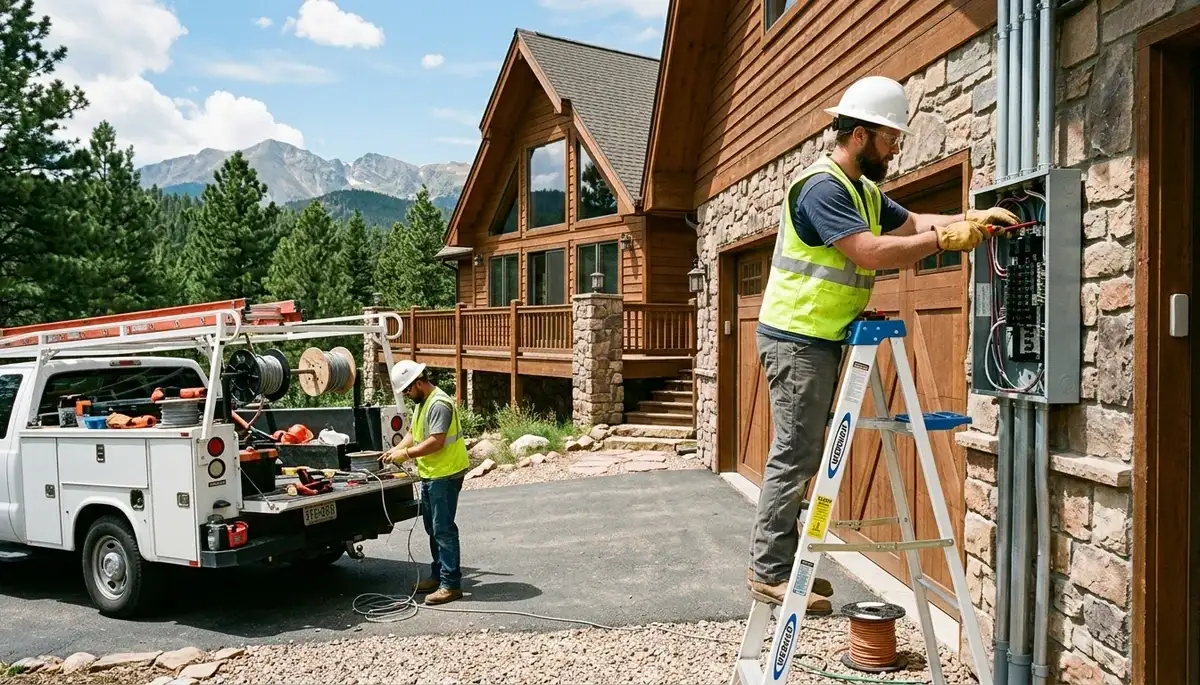
Detached garages, sheds, and workshops on a Conifer property often sit at the end of a buried run that was installed the same year the house was built. The wire gauge, the conduit condition, and the connections at both ends reflect decades of ground movement and moisture.
Local electricians trace the run from the panel to the outbuilding, test what is there, and replace what no longer carries the load safely. The work is done with the house energized wherever possible, keeping disruption to a single work day rather than a multi-day shutdown.
Call (720) 999-9594 to arrange a no-pressure visit with a local electrician who will look at what the house has and tell the homeowner exactly what it needs.
On Call Electrical brings work that holds to every Conifer home it touches.

Full Electrical Services Available in Conifer, CO
The list below covers the range of work local electricians handle in Conifer, CO. Find the item that matches what the house needs and call to get it scheduled.
Urgent Electrical Repairs for Conifer, CO Homes
- Electrical Repair - A breaker that will not reset or an outlet that sparks when something is plugged in needs attention before the day is out.
- Switch Repair - A switch that clicks but does nothing, or one that feels loose in the wall, points to a connection that has worked free.
- Outlet Repair - An outlet that is warm, discolored, or dead on one side is a sign the connection behind it has failed or overheated.
- GFCI Circuits - Bathrooms, kitchens, and garages in these homes often lack the outlets with test and reset buttons that protect against shock near water.
- Smoke Detector Installation - Detectors placed when the house was built may no longer meet current placement requirements or respond fast enough.
If any of these match what the house is doing right now, a call to (720) 999-9594 gets a local electrician on the way.
Panel, Capacity, and Wiring Work for Conifer, CO Homes
- Electrical Panel Upgrade - A panel installed when the house was built was sized for a much smaller load than the home carries today.
- Electrical Panel Installation - Replacing a fuse box or a panel with no room left gives the house the capacity it needs for current and future circuits.
- Electrical Wiring - Aluminum branch wiring from the 1960s and 1970s needs proper terminations or full replacement depending on its condition.
- Electrical Service - The service entrance bringing power into the house may be undersized for what the home now runs.
- New Construction Wiring - Additions and finished basements in these homes need wiring drawn for modern circuit counts, not for what the original house had.
Homes in Conifer, CO that were wired for a smaller era of appliances and lighting now carry loads the original panel was never asked to handle.
Safety and Protection Work for Conifer, CO Homes
- Home Electrical Inspections - An inspection finds what the homeowner cannot see: loose connections, undersized wiring, and circuits running beyond their rating.
- Whole Home Surge Protection - A single surge through the panel can damage every appliance and device connected to the house at once.
- Lightning Surge Protection - Properties on higher ground face a direct path for surge energy that reaches the panel through the service entrance.
- Fire Alarm Installation - Older homes often have alarm systems that do not meet current placement or interconnection requirements.
- GFC Outlets - Adding the correct fault-interrupting outlets in wet areas removes a shock risk that was built into these houses from the start.
Safety work in Conifer, CO homes addresses risks that were accepted when the house was built but that no homeowner needs to carry today. A local electrician can identify what is present, explain what it means, and correct it in a single visit so the homeowner is not left wondering what is behind the walls.
Lighting, Outdoor, and Added-Load Work for Conifer, CO Homes
- Electric Car Charger Installation - A dedicated circuit sized for a Level 2 charger is the only way to charge overnight without stressing a panel already running near its limit.
- Landscape Lighting - Outdoor runs on a Conifer property need weatherproof connections and wire sized for the full run, not for the nearest outlet.
- Security Lights - Motion-activated lighting on a detached garage or along a long driveway requires a circuit that reaches the fixture without voltage drop.
- Recessed Lighting Installation - Adding recessed lights to finished rooms in these homes means working through existing ceilings and finding a circuit with room to spare.
- Generator Installation - A standby or portable generator connection gives the house a transfer path that keeps essential circuits running when the main supply goes out.
Added loads in Conifer, CO homes land on panels and wiring that were never sized for them. Getting the capacity right before the load is connected is the work that prevents the problems that follow.