Homes across Centennial were built mostly from the mid-1970s through the early 2000s, and the electrical contractors in Littleton who serve them know how those houses were wired - and where that wiring now falls short. Many carry panels sized for loads that have since doubled, and a professional electrical panel upgrade is often the first call a homeowner here makes.
When a breaker will not reset or an outlet goes dead, a local electrician who already knows these houses reaches a diagnosis faster than someone working from scratch.
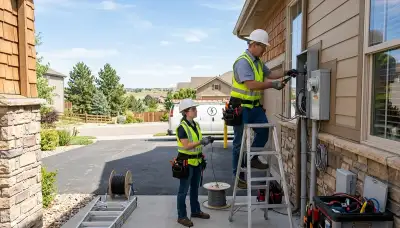
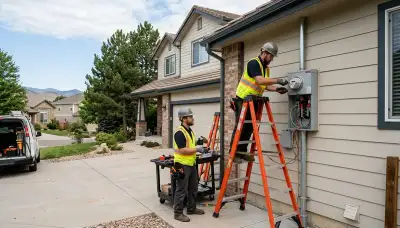
What Local Electricians Know About Centennial Homes
Most homes in Centennial sit on basements with panels in utility rooms or garages. A local electrician knows which walls carry the runs and where access gets tight - details that change how long a job takes and what it actually costs.
These houses commonly need panel capacity work and new circuits added for kitchens and garages. Electricians also handle outdoor runs to detached garages and pool equipment, work that ages differently from the house itself. For similar work nearby, see electrical contractor in Englewood, CO.
If something in the panel or wiring looks wrong, getting it checked now keeps a small problem from becoming a large one.
Electrical Work Matched to How Centennial Homes Are Built
An approach that ignores how a house is built leads to longer jobs and walls that should not have been opened. In Centennial, basements and attached garages give electricians a direct path to most panels and branch runs without touching finished ceilings.
Detached homes on standard lots carry outbuildings and long outdoor conduit runs. Attached homes sometimes share service equipment, which changes what a panel swap involves. Either way, expert outlet repair in a house with a basement is a different job than the same work on a slab.
Four services that fit these homes well: quality ceiling fan installation, reliable generator installation, specialist GFCI circuit installation, and professional smoke detector installation - each one matched to what a house built this way actually needs.
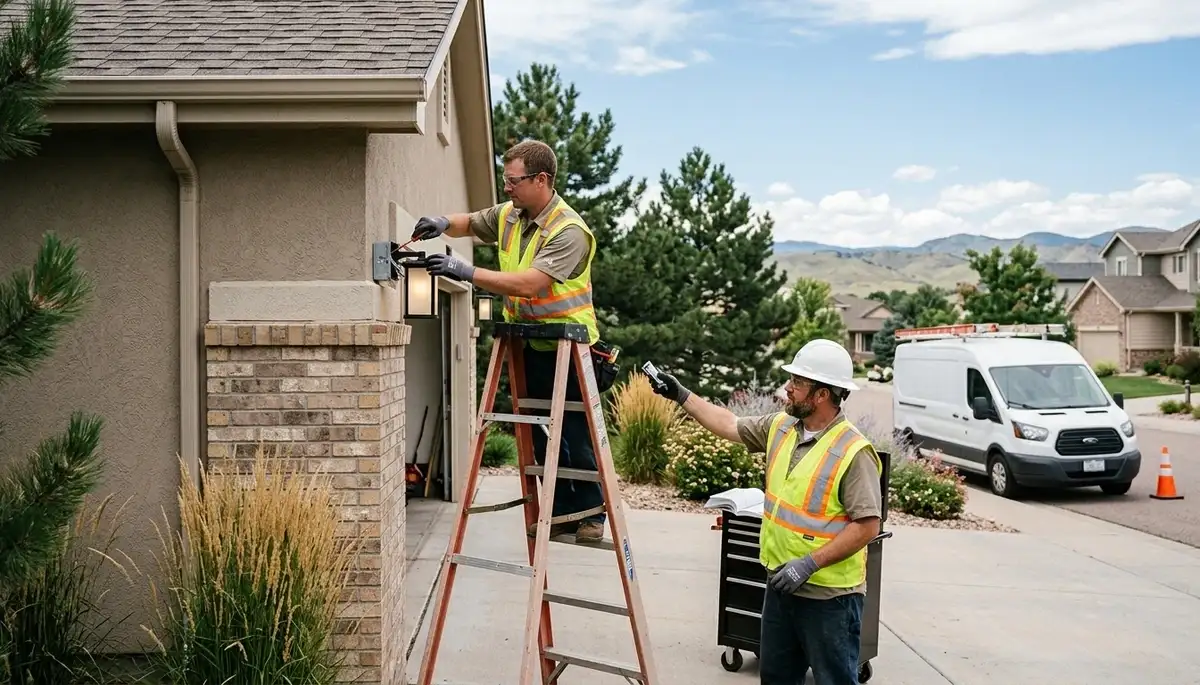
What the Build Years Still Mean for Centennial Homes Today
Most homes in Centennial went up from the mid-1970s through the early 2000s. Houses built in that window came with panels sized for the loads of that era, aluminum wiring in some of the older ones, and circuit counts that assumed one appliance per room. Three things follow from that: panels that are now full, outlets that run warm, and kitchens that trip a breaker when two appliances run at once.
The Panel That Has No Room Left
A homeowner opens the breaker box to add a circuit and finds every slot taken. That is not unusual in a house built in the 1980s. A full panel cannot safely absorb a car charger, a new air conditioning unit, or shop tools in the garage, and doubling up on a breaker creates a fire risk.
Local electricians replace the panel or add a subpanel in the garage, giving the house room to grow. For homeowners in Aurora, CO residential electricians handle the same panel work across similar houses from the same build period.
Outlets That Feel Warm to the Touch
An outlet that is warm, or a light that dims when another appliance starts, points to aluminum wiring - common in homes built in the late 1960s and early 1970s. Aluminum expands and contracts at the connections over time, and loose connections arc before they fail.
Electricians replace the connections or install compatible devices at each outlet and switch. The house stops running warm and the homeowner stops watching the lights for signs that something is wrong.
Circuits That Trip When Two Things Run
A kitchen or bathroom that trips a breaker the moment a second appliance starts was wired for a single load. Rooms used the way they are used now need dedicated circuits, not extension cords or power strips filling the gap.
Adding circuits from the panel to the rooms that need them stops the tripping and removes the extension cords. The two things it improves are daily convenience and the fire risk that comes from overloaded outlets.
A Service Sized for a Smaller House
A car charger in the garage, a pool pump out back, and central air conditioning together push a panel past what it was sized for. On a hot afternoon when the air conditioning runs hard, the added draw makes the problem visible as flickering lights or a breaker that will not stay set.
Electricians upgrade the service entrance and replace the panel with one rated for the current load. After that, the homeowner can run the car charger, the pool equipment, and the air conditioning at the same time without watching the panel.
Basement Runs That Require Wall Access
In a finished basement, running a new circuit to a bedroom or a home office means finding a path that does not require opening every wall between the panel and the room. Tight framing and fire blocking in houses built after the mid-1980s make that path harder.
Local electricians plan the route before the work starts, using the basement ceiling or an existing chase where one exists. Finished surfaces stay intact where the framing allows, and the homeowner gets the circuit without a renovation.
Call (720) 999-9594 to arrange a no-pressure visit with a local electrician who can look at the panel, the wiring, and the circuits and tell the homeowner exactly what the house needs.
On Call Electrical delivers work in Centennial that holds up long after the job is done.

Full Electrical Services Available in Centennial, CO
The work below covers the full range of what local electricians handle in Centennial, CO. Find what matches the situation and reach out.
Urgent Electrical Repairs in Centennial, CO
- Electrical Repair - a breaker that will not reset or an outlet that goes dead in a house that has been running the same circuit hard for decades
- Outlet Repair - a warm or sparking outlet that needs a safe replacement before it becomes a larger problem
- Switch Repair - a switch that sticks, sparks, or no longer controls the fixture it was wired to
- GFCI Circuits - the outlets with test and reset buttons missing from bathrooms and kitchens in older Centennial homes
- Electrical Service - restoring full power to a house after a panel fault or a failed service connection
If any of these match what the homeowner is seeing, a local electrician can be there the same day.
Panel, Capacity, and Wiring Work in Centennial, CO
- Electrical Panel Upgrade - replacing a full or undersized panel in a house that was never wired for what it runs now
- Electrical Panel Installation - a new panel for a house adding a major load such as a car charger or pool equipment
- Electrical Wiring - rewiring rooms or runs that have reached the end of what they can safely carry
- New Construction Wiring - full wiring for additions and detached structures built onto existing Centennial homes
- Home Electrical Inspections - a full look at what the panel, wiring, and circuits are doing before a homeowner buys or renovates
These services address what happens when a house built for one era is asked to carry the loads of another.
Safety and Protection Work in Centennial, CO
- Smoke Detector Installation - placing detectors where they will actually catch a fire, not just where the builder put them
- Fire Alarm Installation - a connected system for a larger home where a single detector in the hallway is not enough
- Whole Home Surge Protection - one device at the panel that stops a voltage spike from reaching every appliance in the house
- Lightning Surge Protection - protection sized for the surge that a direct or nearby strike sends through the service entrance
- GFC Outlets - replacing two-prong and ungrounded outlets in bathrooms, kitchens, and garages where a shock risk is present
Every item on this list addresses a risk the homeowner can picture: a fire that starts in the wall, a surge that kills the refrigerator, an outlet that shocks a child reaching for a plug. Getting these right means the house is safer every day, not just the day the work is done.
Lighting, Outdoor, and Added-Load Work in Centennial, CO
- Electric Car Charger Installation - a dedicated circuit and outlet in the garage sized for the charger the homeowner already owns or plans to buy
- Landscape Lighting - low-voltage outdoor runs to fixtures around a yard that the original wiring never planned for
- Security Lights - motion-activated fixtures on the exterior of a house that needs better coverage after dark
- Recessed Lighting Installation - new cans in a finished ceiling where the homeowner wants more light without adding a fixture
- Ceiling Fan Installation - replacing a light-only box with a fan-rated box and running the circuit that a ceiling fan requires
These are the loads that Centennial homes are being asked to carry now, most of them added long after the house was built. A local electrician sizes the circuit for the actual load and runs the work cleanly so the homeowner does not have to revisit it.